To see the Youtube recording of Dr. Mariano Villalba's program on Esoteric Influences in Post-Revolutionary Mexican Mural Art from Jan. 15, click here: Esoteric Influences

For more links to our videos, click on the "Videos" tab above.

Upcoming Events & Programs


To join our e-blast list for emails about programs, use the "contact us" button at left. 
View the upcoming Winter 2026 program brochure here: 
COMING UP IN JANUARY 2026:
ZOOM: 12 GATES SWEDENBORG STUDY Sunday, January 25, 2026  3:30–4:30 PM Central: The 12 Gates: A Journey To the Heart of the Swedenborgian Tradition, with Dell Rose
Join us on the second and fourth Sundays of the month, beginning on Sunday, January 11, 2026 at 3:30 PM central time. 
On January 11, we will begin our year-long introduction to Swedenborgian Spirituality, The 12 Gates.® Each monthly course will explore the unique nuances of the Swedenborgian tradition, and the ways in which Swedenborg’s writings help us to re-engage and internalize the teachings of the scriptures. The topic for January, is a deep dive into the notion of Word.
 
The Word of God is not identical to the biblical scriptures,  but is something beyond any written text. As he writes:
 
"This then is the internal sense of the Word, its veriest life, which does not at all appear from the sense of the letter. But so many are its arcana that volumes would not suffice for the unfolding of them. A very few only are here set forth, and those such as may confirm the fact that regeneration is here treated of, and that this proceeds from the external man to the internal." Arcana Coelestia §64. (Potts)
 
Our first session will discuss the origin and compilation of the New Testament, as well as Swedenborg’s doctrine of the Word. For the pdf, click the "Readings" tab in the left-hand column navigational bar, or click here: 12 Gates Readings
Zoom Room: 558 403 3057
(Room opens at 3:15 PM central time on Sunday, January 11)
Password: Swedenborg
Zoom Link Sunday 1/11/2026 3:30 PM central time
“It had a wall great and high, and had twelve gates, and at the gates twelve angels; and names were written thereon, which are the names of the twelve tribes of the children of Israel.” (Rev. 21:12) 
The second session of our course on Sunday, January 25 will be more reflexive and we welcome the experiences and thoughts of our participants. To stimulate some of this discussion, see the four following meditations found under "12 Gates" on the Readings page of this site. 
On January 25, we will continue our discussion of Swedenborg's views of the Word. The Word of God is not identical to the biblical scriptures,  but is something beyond any written text. As he writes:


"This then is the internal sense of the Word, its veriest life, which does not at all appear from the sense of the letter. But so many are its arcana that volumes would not suffice for the unfolding of them. A very few only are here set forth, and those such as may confirm the fact that regeneration is here treated of, and that this proceeds from the external man to the internal." Arcana Coelestia §64. (Potts)


Join in this second session Jan. 25, 3:30 PM central:
Zoom Room: 558 403 3057
Password: Swedenborg
“It had a wall great and high, and had twelve gates, and at the gates twelve angels; and names were written thereon, which are the names of the twelve tribes of the children of Israel.” (Rev. 21:12) The second session of our course on Sunday, January 25 will be more reflexive and we welcome the experiences and thoughts of our participants. To stimulate some of this discussion, see the four following meditations found under "12 Gates" on the Readings page of this site. 
Join us on the second and fourth Sundays of the month, beginning on Sunday, January 11, 2026 at 3:30 PM central time. 

Our first session video is available on our Youtube channel on January 12, at: Link to the Jan. 11, 2026 12 Gates video

For the pdf, click the "Readings" tab in the left-hand column navigational bar, or click here: 12 Gates Readings

Zoom Room: 558 403 3057
(Room opens at 3:15 PM central time on Sunday, January 11)
Password: Swedenborg

It had a wall great and high, and had twelve gates, and at the gates twelve angels; and names were written thereon, which are the names of the twelve tribes of the children of Israel. (Revelation 21:12)

“It had a wall great and high, and had twelve gates, and at the gates twelve angels; and names were written thereon, which are the names of the twelve tribes of the children of Israel.” (Rev. 21:12) 
Dell J. Rose develops and hosts programs for the Swedenborg Library in Chicago. Dell holds the position of Swedenborg Doctoral Fellow with the Swedenborg Society in the United Kingdom, and he is a doctoral candidate at the Centre for the History of Hermetic Philosophy and Related Currents at the Universities van Amsterdam. His research focuses on the intersection of Western esotericism and political reform, particularly with Swedenborgianism in 19th century Britain. 

 “It had a wall great and high, and had twelve gates, and at the gates twelve angels; and names were written thereon, which are the names of the twelve tribes of the children of Israel.” (Rev. 21:12) 

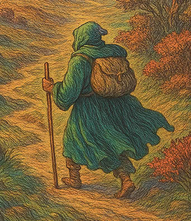
The Twelve Gates is a year-long, immersive introduction to Swedenborgian spirituality, inviting students to journey through Emanuel Swedenborg’s visionary theology as a pilgrim bound for the New Jerusalem. Weaving together biblical exegesis, theological reflection, and the imaginative world of medieval pilgrimage, the course uses the metaphor of “gates” to structure a sustained exploration of prophecy, the human self, the Word, heaven and hell, judgement, charity, and salvation. 

The course is suitable for ministers, lay readers, and seekers who desire more than an introduction yet less than formal theological training. Its aim is not merely to present Swedenborg’s ideas, but to accompany participants as they discern what it might mean, here and now, to live as citizens of the heavenly city. The program may be followed in congregational study groups or online cohorts, with brief weekly reflections and larger monthly syntheses helping travelers to notice how the journey is transforming their prayer, perception, and use. 

2026 will be the first run of the Twelve Gates, and the ultimate goal will be to provide a stand-alone curriculum that will help to integrate individuals interested in learning more about Swedenborgianism and for confessional Swedenborgians interested in deepening their faith. So please come join us; your opinions will be essential to helping us establish this curriculum, and to help future souls join in their own procession to the Holy City. 


See the "12 Gates" Swedenborg Study information, starting January 11, 2026:
_____________________________________________
ZOOM: Thursday, January 22, 6 PM Central Time: Goethe's Faust: Art As Religion, WITH Dr. David Kretz
This talk explores the idea of art as religion, and dramatic poetry as a
form of magic, in Goethe’s Faust (1808). In his greatest play, Goethe
stands witness to the crises of modernity: crises of aesthetic form and of
language. Can dramatic poetry reanimate older forms, such as tragedy,
to achive an aesthetic theodicy, a justification, in poetry, of Faust, the
quintessentially modern man? To this end, we shall see, poetry would
have to prove its power to disclose real presence, while also being
ethically truthful. These problems crystallize early on in the play with
Faust’s famous translation of the Gospel of John. What spirits guide
Faust’s translation of the Word – and which guides Goethe’s pen?
Dr. David Kretz is a Postdoctoral Associate in the
Humanities Program at Yale University. He holds a
Ph.D. from the University of Chicago’s Committee
on Social Thought and in Germanic Studies.
Prior to coming to the US, he studied philosophy,
literature, and the history of ideas in Paris, Berlin,
and his hometown Vienna. His works addresses how
traditions, including religious traditions, respond to
historical crises. He draws on historical concepts of
translation to re-actualize a notion of translation as
a form of response to historical loss.

This talk explores the idea of art as religion, and dramatic poetry as a

form of magic, in Goethe’s Faust (1808). 

   In his greatest play, Goethe

stands witness to the crises of modernity: crises of aesthetic form and of language. Can dramatic poetry reanimate older forms, such as tragedy,to achive an aesthetic theodicy, a justification, in poetry, of Faust, the quintessentially modern man? 

   To this end, we shall see, poetry would have to prove its power to disclose real presence, while also being ethically truthful. 

   These problems crystallize early on in the play with Faust’s famous translation of the Gospel of John. What spirits guide Faust’s translation of the Word – and which guides Goethe’s pen?


Zoom Room: 558 403 3057
Password: Swedenborg

Dr. David Kretz is a Postdoctoral Associate in the Humanities Program at Yale University. He holds a Ph.D. from the University of Chicago’s Committee

on Social Thought and in Germanic Studies. Prior to coming to the US, he studied philosophy, literature, and the history of ideas in Paris, Berlin,

and his hometown Vienna. His works addresses how traditions, including religious traditions, respond to

historical crises. He draws on historical concepts of translation to re-actualize a notion of translation as a form of response to historical loss.

___________________________

ZOOM: Thursday, January 29, 6 PM Central Time: 

The Historical Trajectory of Jacob Böhme’s Theosophy in Finland and its Existential Resonance with Tomas Mansikka

Join us for a discussion of the history of Jacob Böhme in Finland, reflecting on its character and reasons for its sustained popularity among both high and low. Tomas will discuss Böhme’s theosophical system, especially as it relates to the Paracelsian Naturphilosophie, arguing that Böhme’s impact may be explained from the therapeutic value it offered, taking into account its transboundary nature, as well as its impact on early 19th century existential philosophy.


Zoom Room: 558 403 3057
Password: Swedenborg

Tomas Mansikka is a historian of religion who received his degree in History of Religion at Abo Academy University, Turku, Finland. He has written articles on Paracelsus, Jacob Böhme, Emanuel Swedenborg, and the Pietist movement

in 17th and 18th century Finland. His research draws on history of ideas, philosophy and theology. He has lately written on the imagination in the 17th and early 18th centuries related to

Descartes and Giambattista Vico.